
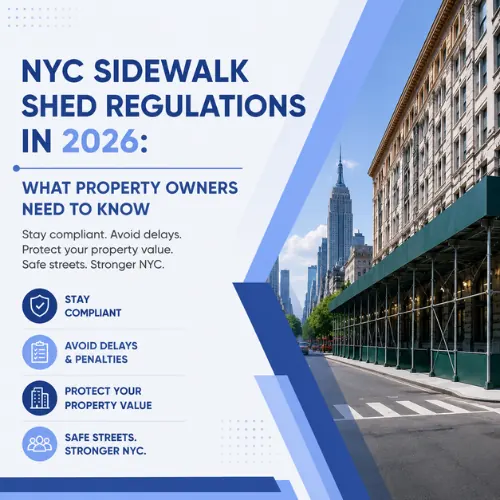
NYC Sidewalk Shed Regulations in 2026: What Property Owners Need to Know
Sidewalk sheds have become one of New York City’s most recognizable—and most criticized—construction conditions. While these structures play an essential role in protecting pedestrians during façade repairs, many remain in place for extended periods, affecting businesses, building operations, and neighborhood streetscapes.
Recent legislative changes and Department of Buildings initiatives place greater emphasis on reducing long-standing sidewalk sheds, improving accountability, and encouraging timely completion of required repairs.
For owners and managers of New York City properties, understanding these requirements is becoming increasingly important.
Why Sidewalk Sheds Are Receiving Increased Attention
Sidewalk sheds exist to protect the public from potential falling debris during façade repairs, inspections, or construction activities. In many situations, they are legally required and remain an important safety measure.
However, long-term sheds can create challenges that extend beyond construction:
- Reduced sidewalk visibility for storefronts
- Limited pedestrian accessibility
- Increased maintenance costs
- Ongoing permit obligations
- Extended compliance requirements
- Negative impacts on building appearance
As a result, New York City has introduced measures intended to improve shed management, encourage active repairs, and reduce unnecessary long-term installations.
What Has Changed for Property Owners?
Recent local laws affecting sidewalk sheds have introduced several important changes, including:
- Shorter permit durations for sidewalk sheds
- Additional information required during permit renewals
- Increased accountability for inactive projects
- New penalties associated with prolonged sheds
- Enhanced lighting requirements
- Updated design standards intended to improve the pedestrian experience
For property owners, these changes place greater emphasis on demonstrating active progress and maintaining accurate documentation throughout the life of a project.
Why Some Sidewalk Sheds Remain in Place for Years
Many people assume a sidewalk shed remains because construction work is still underway. In practice, the reasons are often more complex.
Common causes include:
- Open DOB objections
- Outstanding permits
- Unresolved violations
- Delayed sign-offs
- Incomplete filings
- Pending agency approvals
- Missing close-out documentation
In many cases, physical repairs and administrative completion occur on separate timelines.
One of the most common misconceptions is that a shed can be removed immediately after construction ends. In reality, required filings, approvals, and documentation frequently determine when a project can truly be closed.
Administrative Close-Out Is Often the Critical Path
Owners frequently focus on repair schedules, contractors, and construction activities. However, regulatory requirements can become equally important.
Successful project completion often depends on:
- Coordinating filings early
- Monitoring permit status
- Addressing DOB objections promptly
- Tracking required documentation
- Planning for project close-out before repairs are complete
Projects that treat administrative requirements as a final step may experience unnecessary delays, even after physical work has substantially progressed.
In many cases, the timeline for removing a sidewalk shed depends less on the completion of repairs and more on the completion of required documentation and approvals.
What This Means for FISP Buildings
Buildings subject to New York City’s Facade Inspection & Safety Program (FISP) must continue complying with existing inspection and filing requirements.
Property owners should regularly review:
- Inspection deadlines
- Unsafe conditions
- Repair schedules
- Permit status
- Filing requirements
- Outstanding violations
Changes to sidewalk shed enforcement do not eliminate existing façade safety obligations. Instead, they increase the importance of managing those obligations efficiently.
As regulatory expectations evolve, maintaining organized compliance records and clear project documentation becomes increasingly important.
Questions Property Owners Should Ask
Owners with active sidewalk sheds should consider:
- Is the shed supporting active work?
- Are repair milestones documented?
- Are all filings current?
- Have DOB objections been addressed?
- Are permit renewals approaching?
- Has project close-out planning begun?
- Are responsibilities clearly assigned among consultants and contractors?
These questions often identify issues before they become delays.
What Experienced Owners Do Differently
Owners who successfully manage façade projects often share several practices:
- They begin close-out planning early.
- They monitor compliance deadlines continuously.
- They coordinate technical and administrative work simultaneously.
- They address agency comments promptly.
- They review project status regularly rather than waiting for permit renewals.
A proactive approach can reduce uncertainty, improve coordination, and help prevent avoidable delays.
How SAGE Engineering Helps
SAGE Engineering assists New York City property owners with:
- FISP compliance
- Façade inspections
- Sidewalk shed coordination
- DOB filings
- Permit management
- Violation resolution
- Project documentation
- Administrative close-out support
Because façade projects involve both technical and regulatory requirements, successful outcomes often depend on coordinating these responsibilities together rather than treating them separately.
By managing both compliance and project close-out requirements, owners can often reduce delays and improve project efficiency.
Frequently Asked Questions
Are sidewalk sheds still required?
Does completing repairs automatically allow shed removal?
Why do some sheds remain after work appears finished?
Have FISP requirements changed?
What is the best way to avoid unnecessary delays?
Contact SAGE Today
Managing a sidewalk shed involves more than completing repairs. Permit renewals, DOB filings, FISP requirements, violations, and project close-out obligations can all affect how long a shed remains in place.
SAGE Engineering helps New York City property owners navigate these requirements through façade compliance, permit coordination, and administrative close-out support.
Whether you are addressing an active FISP condition, managing an existing sidewalk shed, or planning upcoming façade work, our team can help you understand your obligations and develop a clear path toward compliance.
Contact SAGE Engineering today to discuss your property’s sidewalk shed status, façade compliance requirements, and project close-out strategy.