
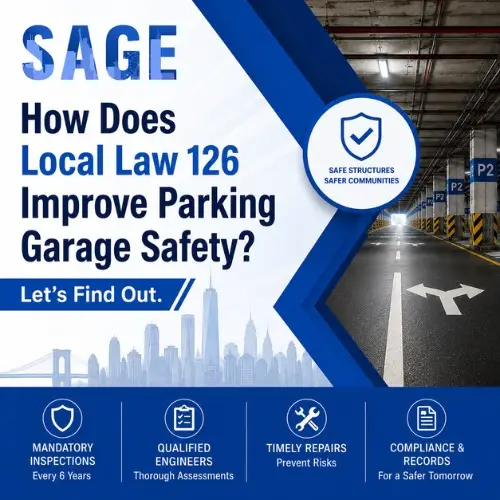
How Does Local Law 126 Improve Parking Garage Safety? Let's Find Out.
New York City has taken significant steps to ensure the safety and structural integrity of its buildings, most recently with parking structures which experience considerable wear and tear.
One of the newer regulations introduced is Local Law 126, which amongst other things, addresses parking garage safety. This law mandates routine parking garage inspections and maintenance to prevent structural failures and ensure public safety.
At SAGE Engineering, we work closely with property owners and managers to help them understand and comply with Local Law 126 requirements.
In this article, we'll explain what Local Law 126 entails, why it was introduced, and how it contributes to safer, longer-lasting parking facilities across the city.
What is Local Law 126?
New York City’s Local Law 126 was passed in 2021 as part of an ongoing initiative to improve structural safety across all building types. Included in this legislation is the mandate that parking garages undergo regular inspections by qualified engineers.
The inspections focus on the condition of concrete slabs, columns, beams, ramps ensuring that all components of the garage are structurally sound and safe for use.

Key Elements of Local Law 126:
- Mandatory Inspections: Every parking structure in New York City (all 5 boroughs) must be inspected by a Qualified Parking Structure Inspector (QPSI) every six years.
- Filing Requirements: Inspection reports must be submitted to the Department of Buildings (DOB).
- Maintenance and Repairs: Conditions observed must be repaired within a timeframe established by the QPSI. If any unsafe conditions are discovered, they must be addressed immediately.
- Phased Implementation: The city has divided garages into cycles based on borough, ensuring systematic enforcement.
But why was Local Law 126 introduced?
The introduction of NYC Local Law 126 wasn't arbitrary; a pressing need for stronger oversight drove it. In the past decade, multiple incidents across the United States highlighted the risks associated with aging parking structures.
Key Reasons Behind Its Introduction:
- Ageing Infrastructure: Many NYC parking garages were built decades ago, using materials that have since degraded due to constant exposure to moisture, road salts, and freeze-thaw cycles.
- Previous Lack of Regulation: Before Local Law 126, there were limited requirements for regular parking garage inspections, which allowed structural issues to go unnoticed until they became severe.
- Public Safety Concerns: Structural collapses in New York City as well as in other cities underscored the potential danger of deferred maintenance, prompting New York City to take action.
- Encouraging Accountability: The law ensures property owners take active responsibility for the safety and upkeep of their garages.
What are the Key Safety Improvements Under the Law?
Local Law 126 has brought several changes to the New York City Building Code including safety improvements to New York City’s parking structures, creating a more reliable and transparent inspection system.
Regular and Standardized Inspections:
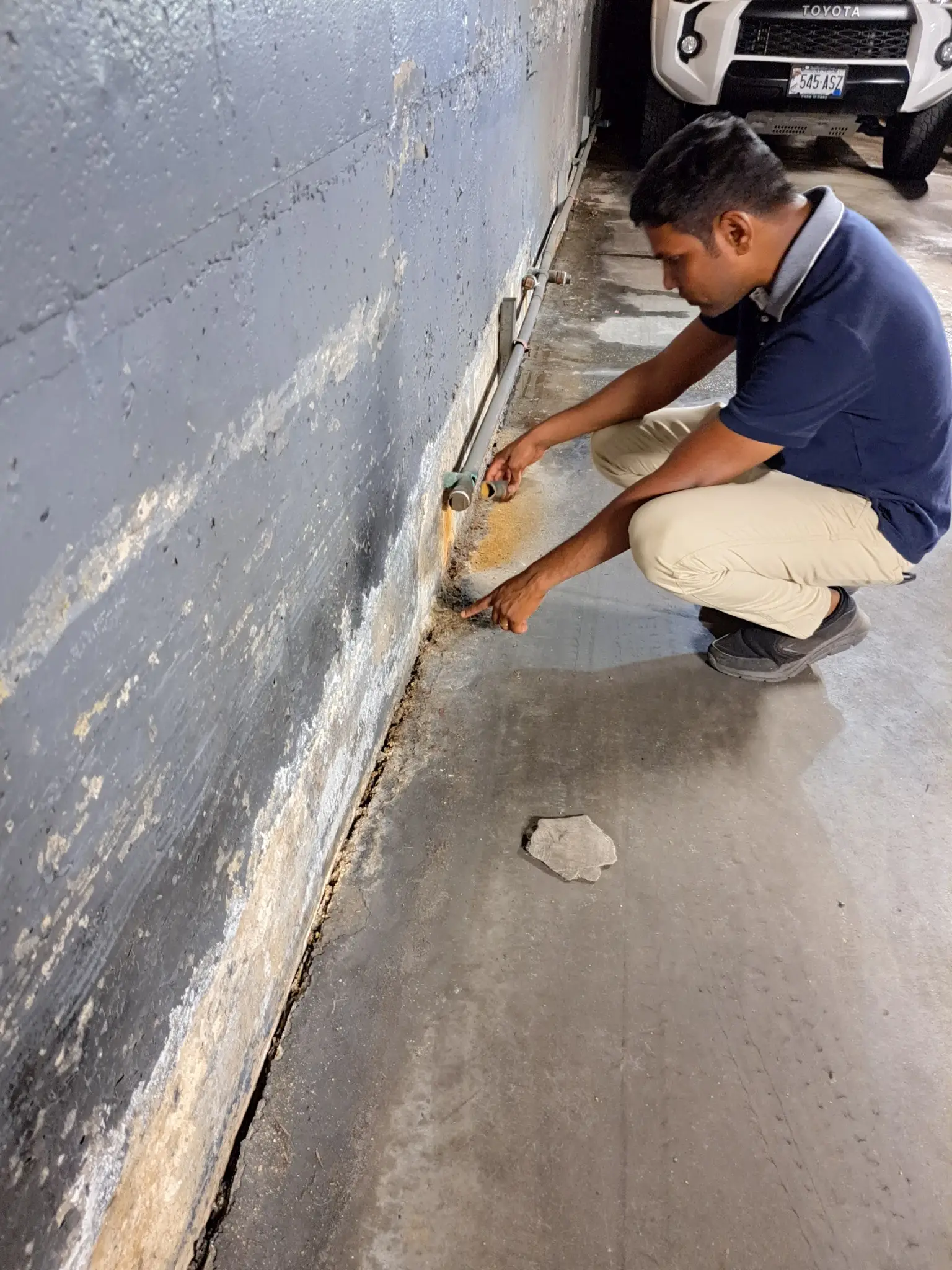
The most significant change is the requirement for periodic parking garage inspections. It ensures that structural issues such as cracks, corrosion, or water infiltration are detected early before they become hazardous.
Professional Oversight:
Only Qualified Parking Structure Inspectors (QPSIs), licensed professional engineers with DOB-approved parking structure experience, can carry out these assessments. It guarantees that inspections are thorough and technically sound.
Enhanced Maintenance and Repair Protocols:
If an inspection reveals any unsafe or potentially hazardous conditions, owners are legally required to carry out immediate repairs. This approach not only minimizes the chances of further deterioration and structural failure, but most importantly ensures the safety of the public.
Improved Record Keeping:
The law also mandates detailed record-keeping of all inspections, repairs, and maintenance. This documentation promotes transparency and helps owners track the health of their properties over time.
Inclusion of Parapet Observations:
Interestingly, separate from parking structure reports, Local Law 126 also introduces the requirement for annual parapet inspections of all buildings (except one and two family detached homes) to ensure that even these upper structural elements are checked for stability, further improving public safety standards.
The Role of Property Owners
Property owners hold a vital role in the success of Local Law 126. With most parking structures in the city averaging 35–45 years old, timely maintenance is essential. Studies show that every $1 spent on preventive maintenance saves up to $4 in future repairs, proving that early intervention is both safer and more economical.
Under Local Law 126, property owners are ultimately responsible for ensuring parking garage safety and compliance. They must hire a Qualified Parking Structure Inspector (QPSI) to perform the required parking garage inspection within their assigned cycle.
After the inspection, the QPSI will classify the structure as Safe, Safe with Repair and/or Engineering Monitoring (SREM), or Unsafe.
Owners must promptly address any issues identified, carry out necessary repairs, and maintain detailed records of all reports and maintenance for at least six years.
By staying proactive, property owners not only meet their obligations under NYC Local Law 126 but also protect their assets, reduce liability, and create a safer environment for everyone who uses their facilities.
Understanding the Local Law 126 Compliance Cycle
To ensure manageable implementation, New York City introduced a phased schedule with three sub-cycles:
- Cycle 1A (2022–2023): Manhattan Community Districts 1–7
- Cycle 1B (2024–2025): Manhattan Community Districts 8–12 and Brooklyn
- Cycle 1C (2026–2027): Bronx, Queens, and Staten Island
How Can SAGE Engineering Help You Ensure Compliance?
At SAGE Engineering, we specialize in helping property owners navigate the technical and administrative requirements of Local Law 126.
Our Expertise Includes:
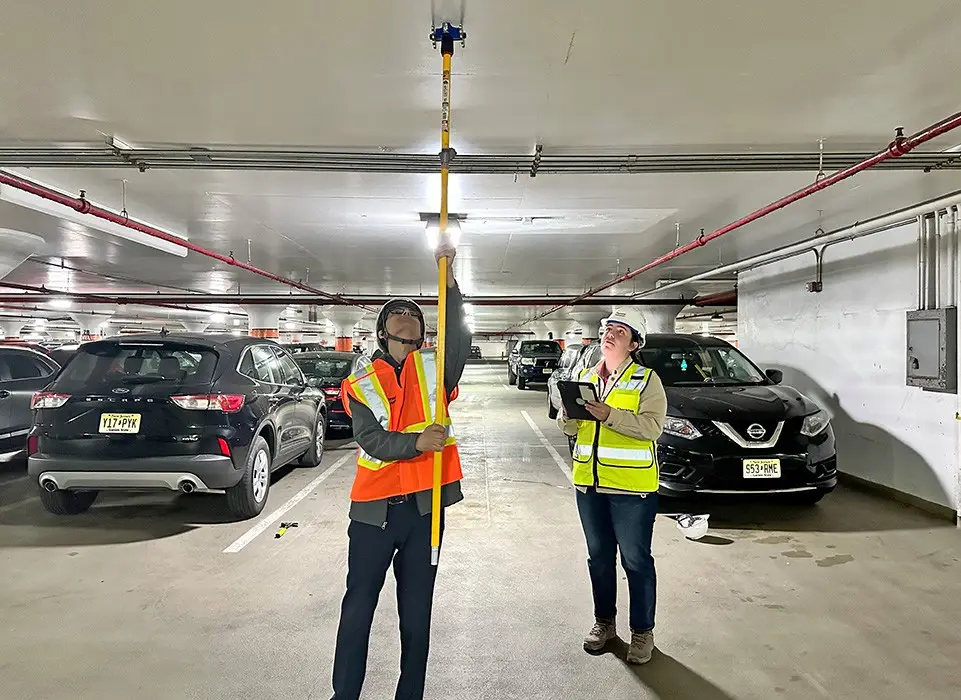
- Comprehensive Parking Garage Inspections: Our qualified engineers conduct detailed structural assessments in accordance with Local Law 126.
- Repair and Maintenance Planning: We develop cost-effective repair strategies that prioritise safety without unnecessary expense.
- Report Filing and Compliance Support: We handle all report submissions to the DOB, ensuring you meet every deadline.
- Parapet Inspections: Beyond parking garages, our team also offers annual parapet inspection services for complete Local Law 126 coverage.
Frequently Asked Questions
Got questions about Local Law 126 and parking garage inspections in NYC? Here are answers to the most common ones.
What does Local Law 126 require?
Who can inspect a parking garage under this law?
Which areas are covered in 2026?
Does Local Law 126 cover anything beyond parking garages?
Is preventive maintenance really worth it?
Conclusion
Local Law 126 represents a significant step forward in ensuring public safety throughout New York City. By requiring regular parking garage inspections and parapet observations, the law helps prevent structural failures, promotes proactive maintenance, and ultimately protects both people and property.
With expert partners like SAGE Engineering, navigating Local Law 126 compliance becomes a smooth, efficient process. Our qualified engineers are ready to help you meet every requirement, keeping your building safe, compliant, and long-lasting.